
Confined space training at the face — not the surface.
An Indian underground coal mine deployed Drona VR confined-space modules where the work happens — underground, at the face. Operators rehearsed sump entry, atmosphere checks, and rescue protocols in immersive simulation. Confined-space protocol violations fell 45% in 90 days.
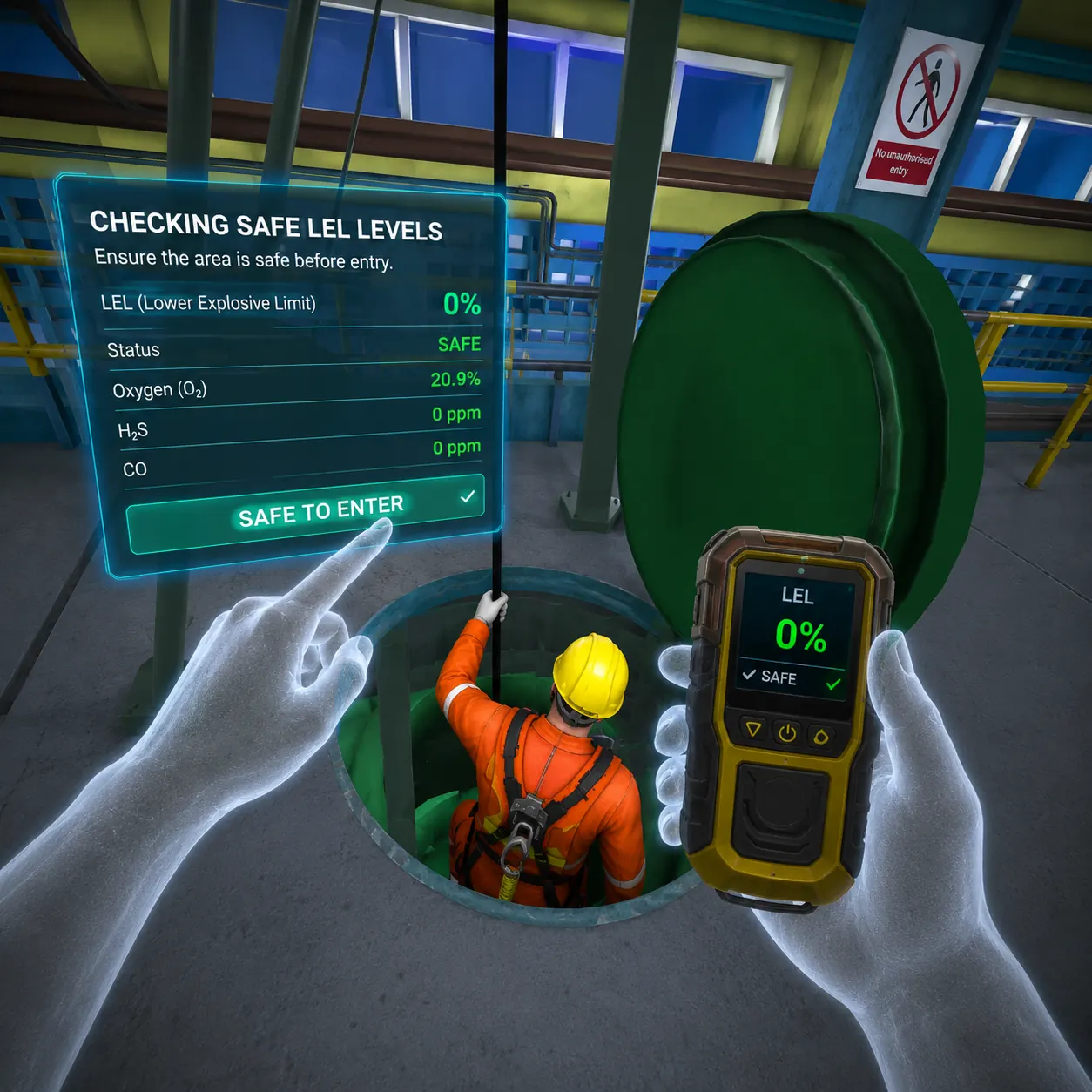
Underground operators trained at the surface. They worked at the face.
Indian underground coal mine
Indian underground coal mine, multi-shaft operation. Several hundred underground operators across active production faces.
Confined-space training had been entirely surface-based — classroom sessions at the colliery office, simulated drills above ground. The work happened underground, at the face, in conditions that did not match training reality.
DGMS audits had begun asking for evidence operators could perform protocols at the face, not at the surface. Documentation was attendance-only.
Module deployed: Confined Space Safety.
Drona VR's offline runtime made underground deployment viable. Headsets ran modules entirely from local storage — no underground network needed. Operators rehearsed sump entry, attendant communication, atmosphere protocols, and rescue procedures at the face itself.
EHS engineers mapped the mine's specific confined-space entry SOP — including mine-specific sump dimensions, atmospheric conditions, and rescue chamber locations.
Deployment timeline.
Numbers from 90 days post-deployment.
Protocol violations declined.
Quarterly DGMS reporting showed confined-space protocol violations declined ~45% in the first 90 days.
Training at point of work.
For the first time, the customer trained at the actual work location underground — not at the surface. Operators reported markedly higher engagement.
Attendant protocol completion.
In evaluation, every attendant role-play passed the protocol — communication, atmosphere monitoring, rescue trigger.
Audit format accepted.
DGMS auditors accepted the per-learner per-step evaluation report as competency evidence at the face.
Underground operations are a black hole for training. We literally take headsets down the shaft now and operators rehearse the SOP at the face.
Three modules. One platform.
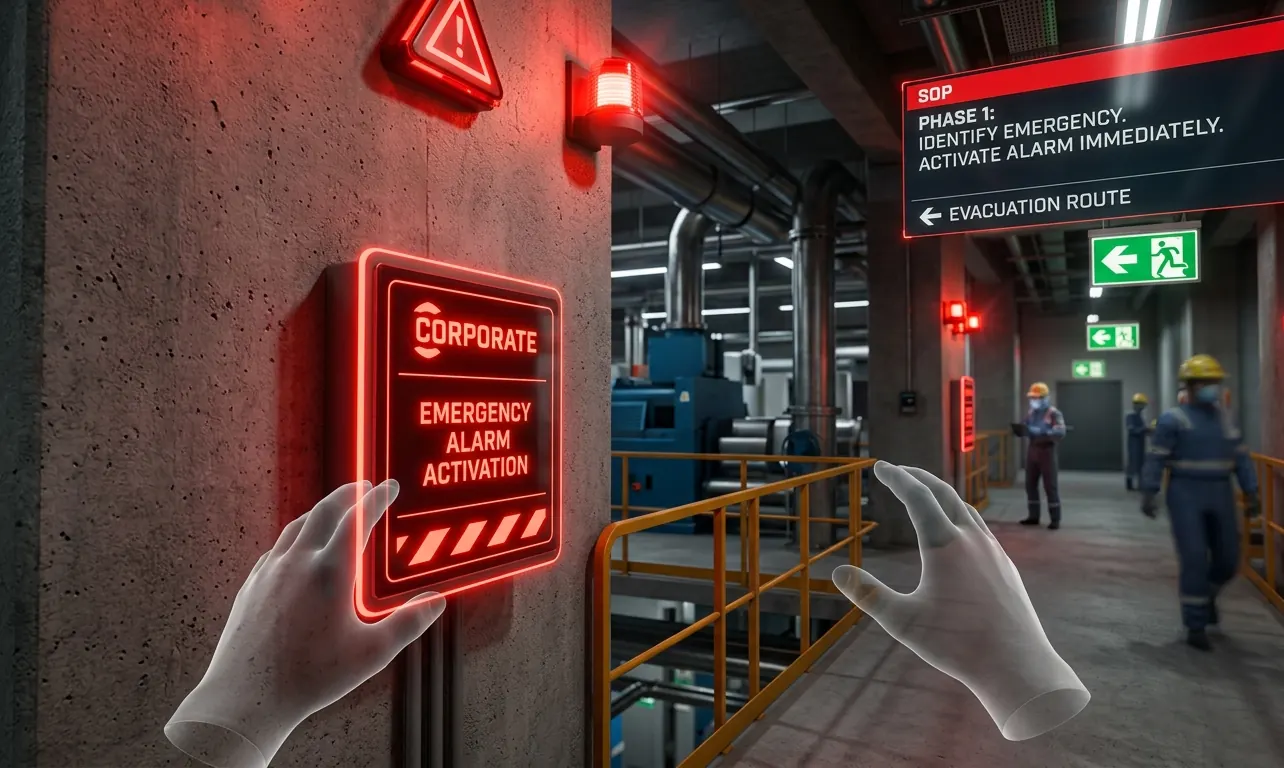
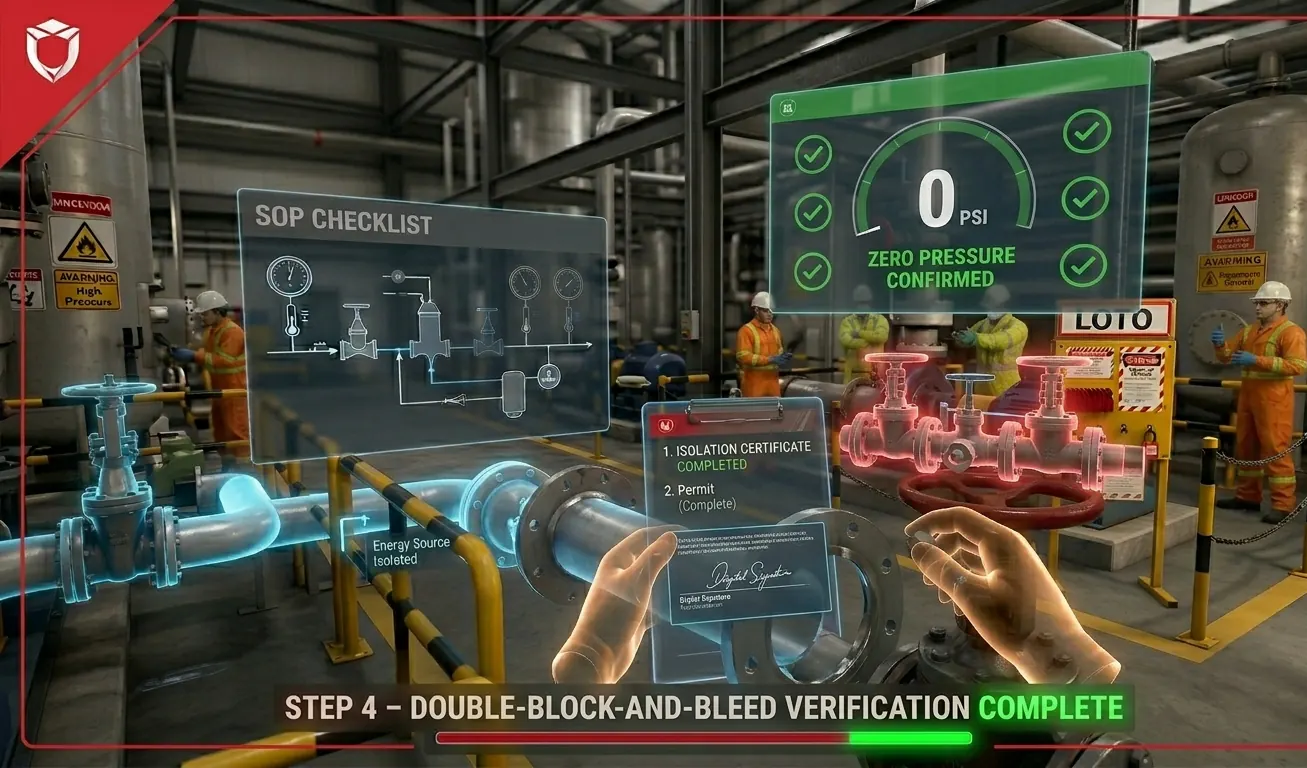
Three takeaways from this deployment.
Train where the work is.
Surface-only training will continue to fail in environments where the work happens underground. Offline-first deployment changed that.
DGMS expectations have shifted.
The audit standard moved from attendance to competency. Drona's per-step evaluation reports met that bar.
Attendant role gets the most lift.
Of the SOP roles, the attendant — historically least practiced — saw the largest competency gain.
Train mining for the work where mistakes are audit findings.
Book a 15-minute discovery call. We will walk you through the modules deployed in this case study, on a real headset, with your SOP language.