
Permit-to-work errors fell by half in offline-first VR rehearsal.
An Indian oil refinery had been tracking persistent permit-to-work documentation errors — incomplete sign-offs, missed atmosphere checks, expired permits in use. Drona VR deployed permit-to-work and confined-space modules entirely offline at the unit. Errors halved within the first quarter.
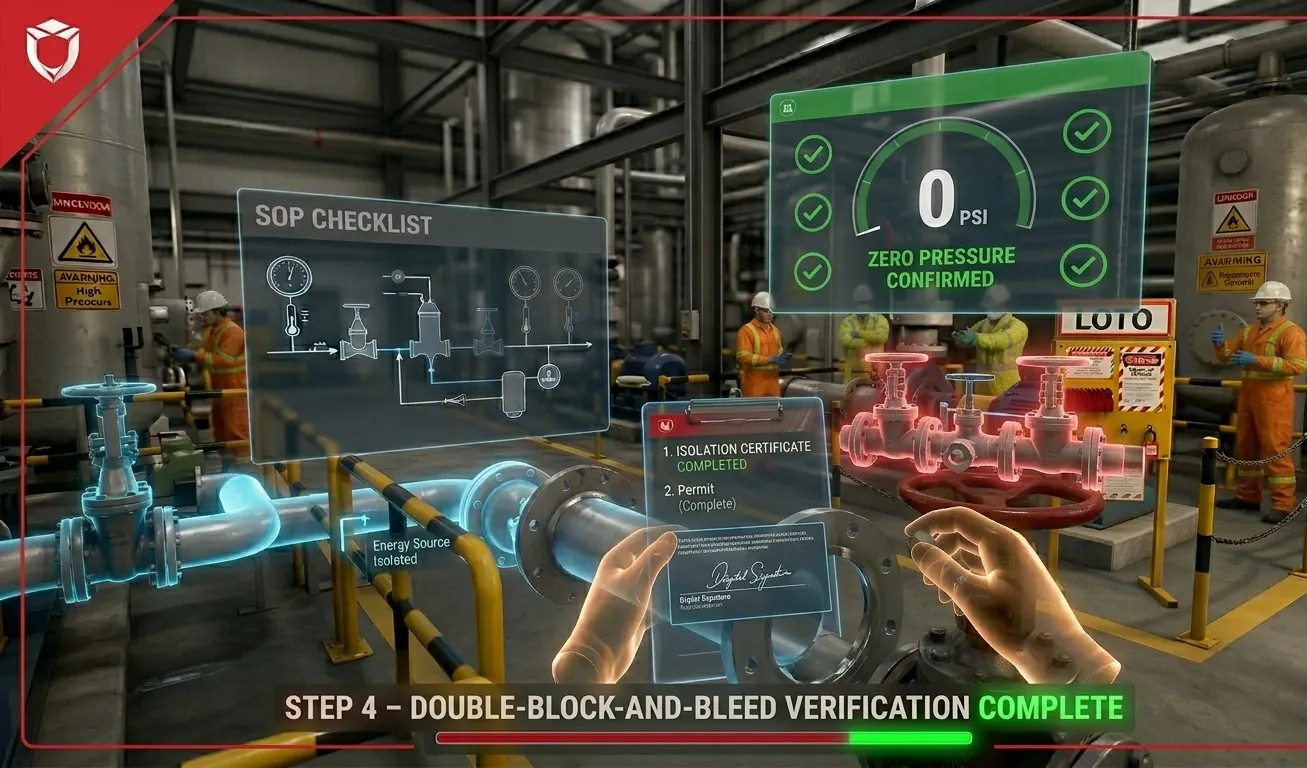
No Wi-Fi at the unit. Every previous digital training tool failed there.
Indian oil refinery
Indian oil refinery with multiple process units. Network-segregated by design — no Wi-Fi at the unit, intentional IT policy.
The customer had evaluated four VR training vendors over two years. Each one failed the same test: their cloud-dependent runtime did not work inside the process units, where IT policy intentionally segregated networks.
The customer's persistent issue was permit-to-work documentation errors. Operators were skipping atmosphere checks, leaving sign-offs incomplete, and re-using expired permits during shift handovers. Classroom training did not change the rate.
Module deployed: Permit-to-Work + Confined Space Safety.
Drona VR's offline-first runtime was the deciding factor. Modules ran entirely on Meta Quest headsets at the unit — no network calls, no cloud dependencies, no IT redlines. Learner data buffered locally and synced when headsets returned to the depot.
VB Group EHS engineers mapped the customer's exact permit form and confined-space entry SOP. Modules replicated the form completion, sign-off chain, and atmosphere-check decision points step-for-step.
Deployment timeline.
Numbers from 90 days post-deployment.
PTW documentation errors halved.
Quarterly tracking showed permit-to-work documentation errors fell ~50% across both pilot units in the first 90 days.
IT redlines: zero.
For the first time in four vendor evaluations, the customer's InfoSec team approved a VR training tool without architectural redlines. Offline-first runtime carried the day.
Faster PTW certification.
Operator certification on the PTW workflow moved from quarterly classroom cycles to monthly headset-based — four-fold acceleration.
Confined-space attendant protocol.
In evaluation, every confined-space attendant role-play passed the protocol. Atmosphere check, attendant communication, rescue plan — all completed.
Our refinery has no Wi-Fi at the unit. Every digital training tool we tried failed there. Drona just works — offline, on the headset, no cloud calls.
Three modules. One platform.
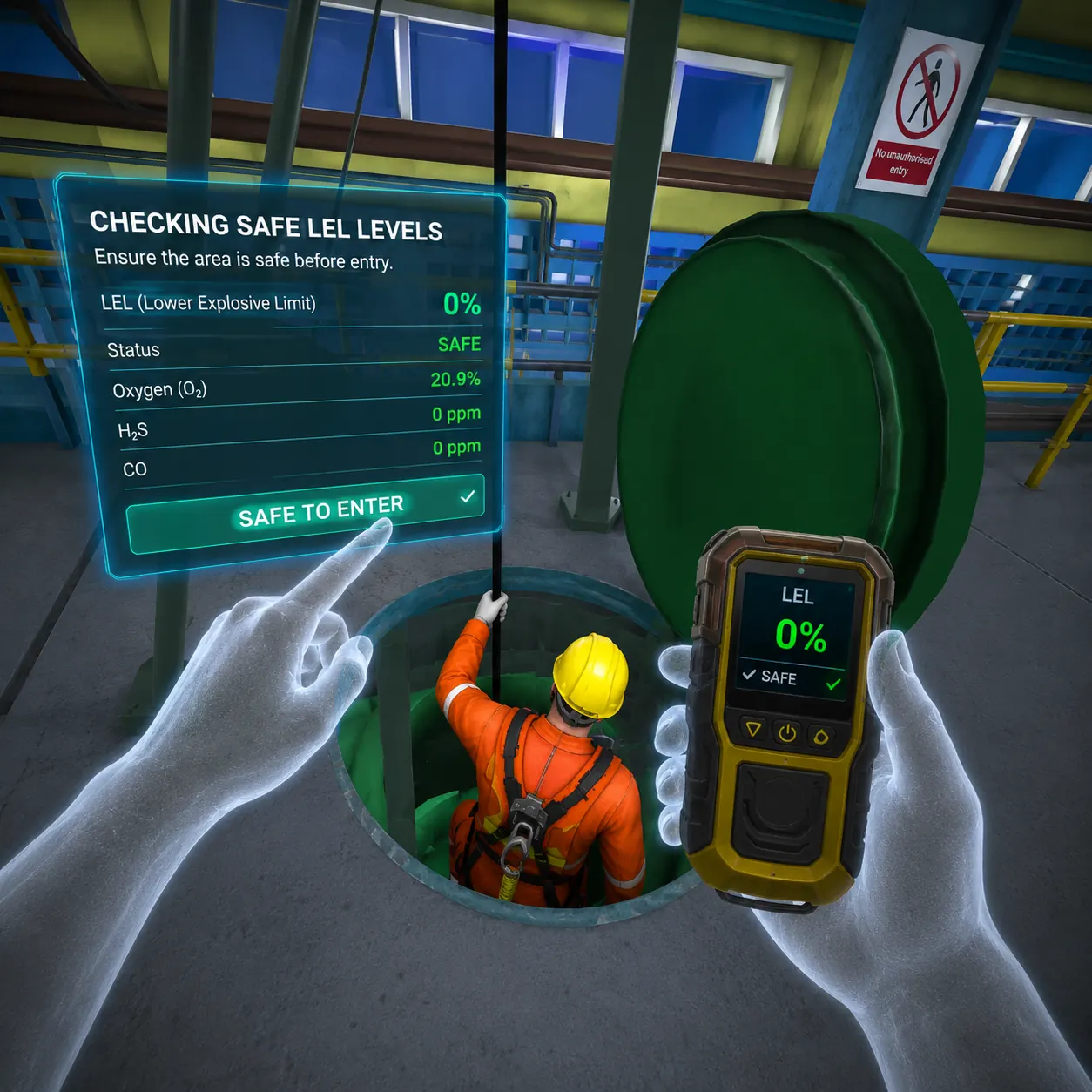
Three takeaways from this deployment.
Offline-first eliminated the IT veto.
For network-segregated environments, offline-first runtime is not a feature. It is the gating requirement.
Form fidelity matters.
Replicating the customer's exact permit form — not a generic version — was what made operators take the rehearsal seriously.
Sync-at-depot fits operational reality.
Operators do not need real-time sync from the unit. End-of-shift sync at the depot is more than sufficient and aligns with how shift handovers already work.
Train oil refining for the work where mistakes are audit findings.
Book a 15-minute discovery call. We will walk you through the modules deployed in this case study, on a real headset, with your SOP language.